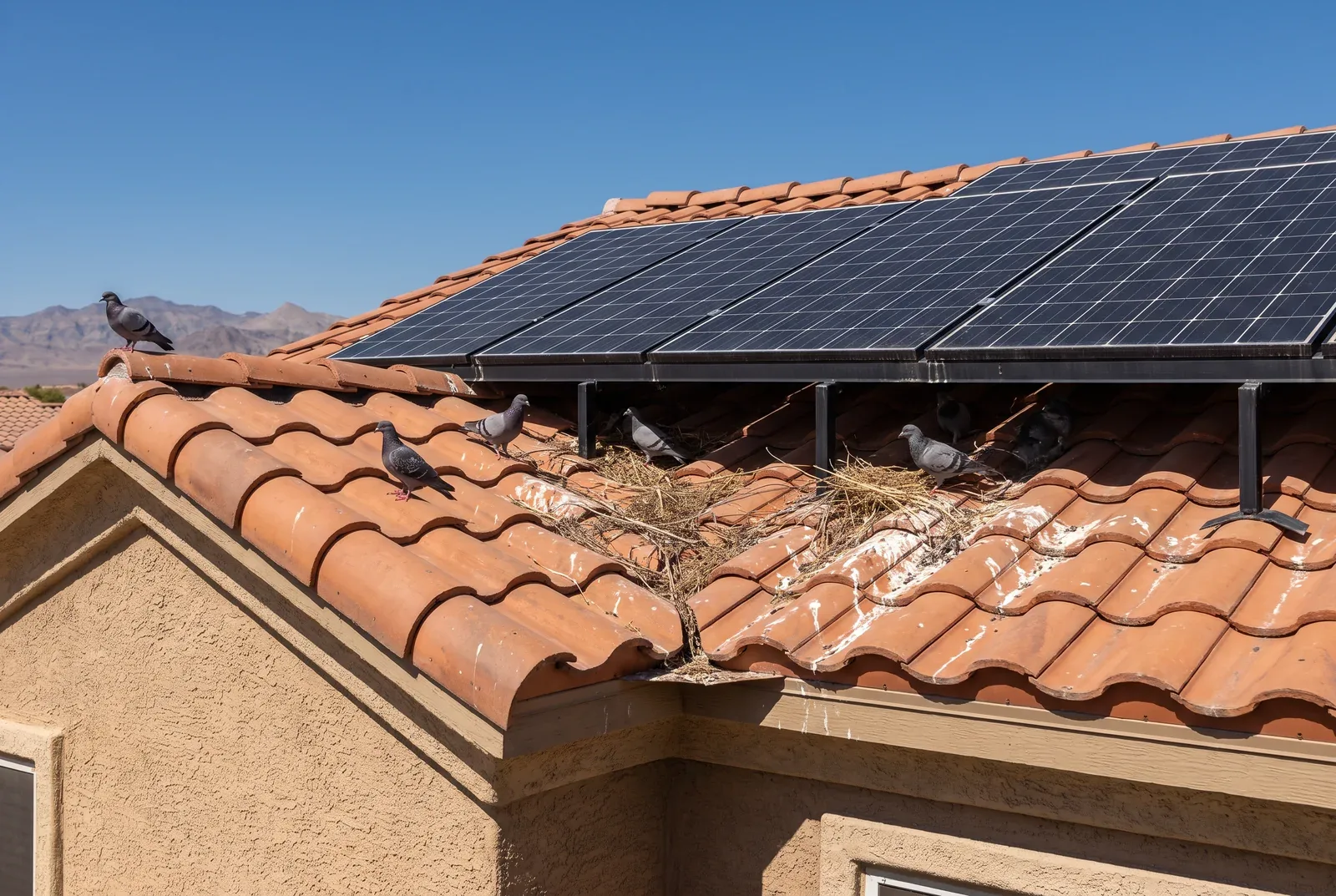
Ask anyone with rooftop solar in Las Vegas about pigeons and you will hear the same story: a few birds on the roof, then a few more, then a nest under the panels, droppings on the patio and the pool, and a cooing that starts before sunrise. The valley’s tile roofs and solar arrays give pigeons exactly what they look for, a sheltered ledge with shade and height. This is what the local rules say, what the health district says about the mess, and what actually keeps them off a house.
We run Pigeon Control Las Vegas, which handles solar panel screening, pigeon exclusion and cleanup for valley homes, and we are a guest here. Top of Las Vegas asked what a homeowner should know before calling anyone.
Why they pick your roof
Pigeons nest on flat, sheltered ledges. The University of Nevada, Reno Extension lists the usual spots: window ledges and balconies, under bridges, behind and on signs, in soffits, and in the attics of houses, especially houses with tile roofs. A solar array adds a covered space a few inches above the tile, out of the wind and out of sight of hawks. Local news has followed the result across the valley, from a Summerlin homeowner whose pool and trampoline were covered in droppings to a Centennial Hills neighbor clearing birds from her panels with a bamboo pole.
What the droppings do
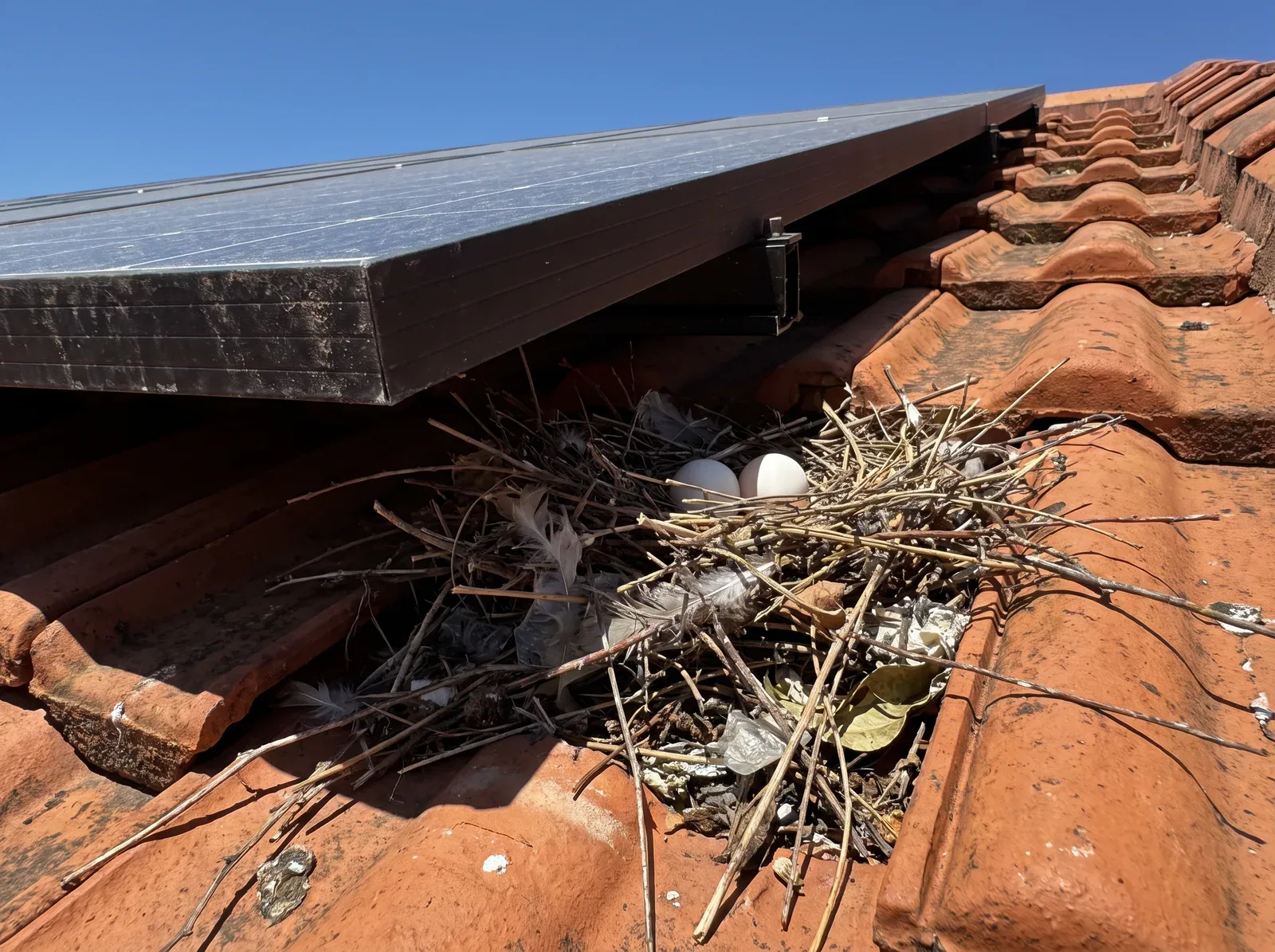
The health district says pigeon droppings can damage buildings, vehicles, trees, lawns and fountains, and UNR Extension notes the uric acid in them can eat into the finish on buildings and cars. The bigger concern is what dries out under a panel. The health district lists histoplasmosis, cryptococcosis and psittacosis among the diseases pigeons can carry, and says the debris attracts mice, rats and flies. Psittacosis, it says, spreads when people breathe in the dust of dried droppings or feathers. The CDC advises that large amounts of bird droppings be cleaned by professionals who specialize in hazardous waste.
For a small mess, the health district’s method is: long sleeves and pants, waterproof gloves, eye protection, a filter mask and closed waterproof shoes. Mix one part bleach to nine parts water, soak the area for 10 minutes so nothing goes airborne, scrape it into doubled plastic bags, then scrub, rinse, apply bleach again and let it dry. Never dry-sweep or blow droppings.
What the law says
Feeding is the one thing every local government in the valley agrees on. The City of Las Vegas banned feeding wild pigeons in 2018, with a penalty reported at up to $1,000 and six months in jail. Clark County did the same for unincorporated areas in 2017 under County Code 10.36.035, which calls roosting pigeons a health and property hazard. Henderson’s code has carried the same rule since 2011, and North Las Vegas has adopted a feeding ban as well. If a neighbor is feeding them, the county asks residents in unincorporated areas to report it to Animal Protection Services at 702-455-7710.
What the governments do not do is remove the birds. Clark County Animal Protection Services says it does not remove or eradicate pigeons, and Henderson tells property owners to hire private pest control. Federally and in Nevada, the rock pigeon is an unprotected, non-native species, so it is not covered by the Migratory Bird Treaty Act.
What keeps them off
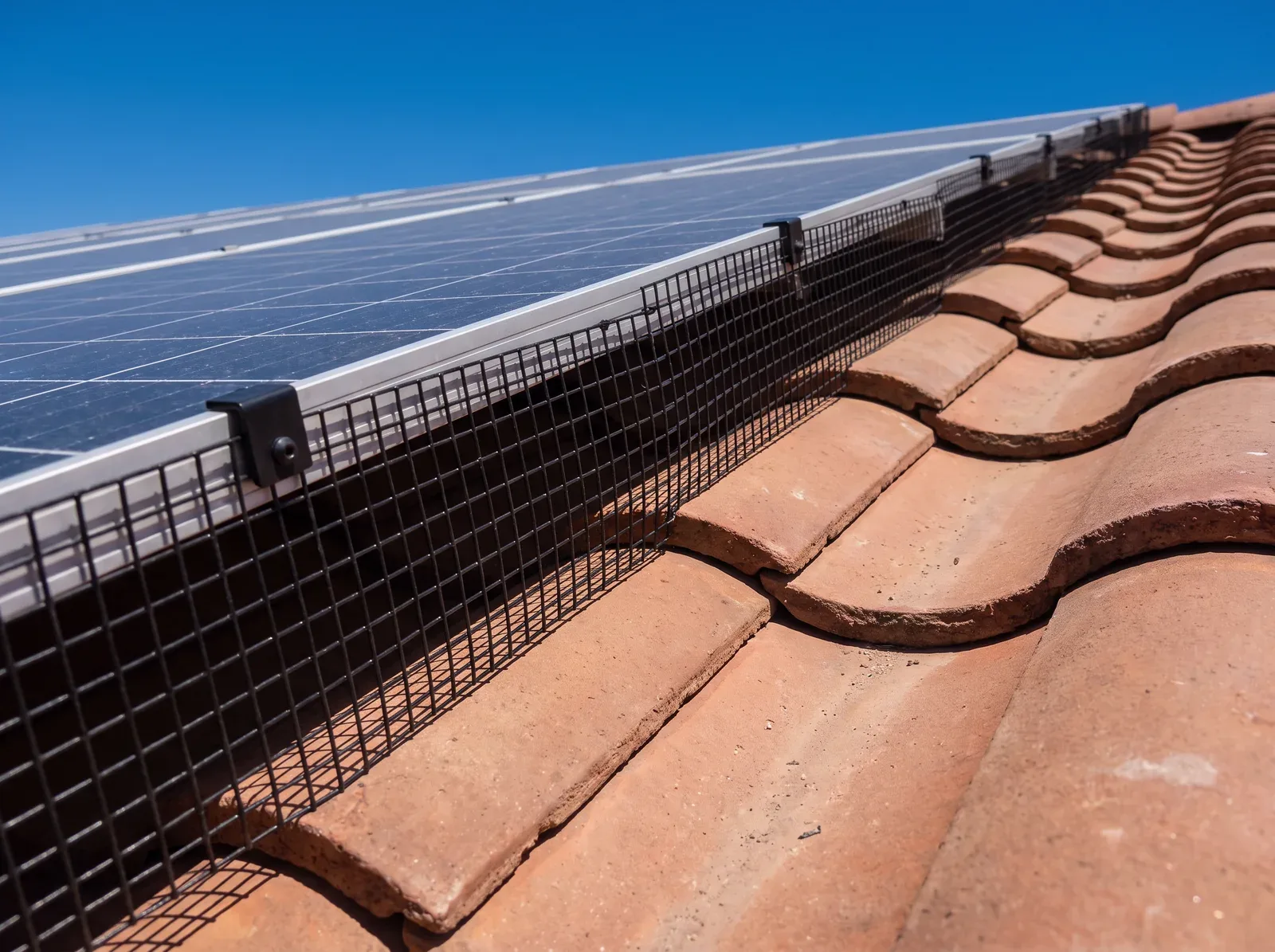
Both the health district and the product makers point the same way: close off the space the birds use. On a solar home that is three jobs:
- Clear and clean. Nests and droppings come out from under the array first, cleaned the way the health district describes.
- Screen the panels. A coated wire mesh is clipped around the edge of the array to close the gap underneath. Manufacturers such as Bird B Gone and Nixalite sell clip systems that need no drilling into the panels, and the mesh still lets air move under the array.
- Block the other ledges. The health district recommends netting on balconies, angling ledges to 45 degrees or more, and closing roosting spots with quarter-inch mesh. On tile roofs, metal bird stops close the open ends of the first row of tile at the eave.
Our page on solar panel pigeon proofing in Las Vegas walks through the screening step by step, with what to ask before anyone climbs on the roof.
What Pigeon Control Las Vegas does
Most valley homes need the birds kept out, not just chased off, and the right job depends on where they are sitting. This is the work we arrange for Las Vegas homes.
Call Pigeon Control Las Vegas
Four kinds of work, matched to where the pigeons are:
- Solar panel screening. nests and droppings cleared from under the array, then mesh clipped to the panel frame to close the gap.
- Roof, ledge and patio exclusion. spikes on parapets and ledges, netting under patio covers and carports.
- Trapping and removal. for an established flock that exclusion alone will not clear.
- Droppings and nest cleanup. built-up droppings removed wet and the surface sanitized before any exclusion goes on.
A local provider looks at the roof, explains the work that applies and confirms the price before anything starts. Homes across the valley, Summerlin to Henderson.
Sources. Southern Nevada Health District, Pigeon Prevention and Clean-up Guidelines, and Psittacosis (Ornithosis); University of Nevada, Reno Extension, publication SP-02-11 (2002) and publication 2998 (2011); CDC, Histoplasmosis prevention; Clark County Code 10.36.035 (Ordinance 4539, November 7, 2017); Clark County Animal Protection Services FAQ; Henderson Municipal Code 7.08.040; City of Las Vegas, Feeding wildlife now prohibited (November 4, 2020); News 3 Las Vegas, October 17, 2018 and November 7, 2017; Las Vegas Review-Journal on the North Las Vegas ordinance; KTNV reports on Summerlin and Centennial Hills; Fox5, November 13, 2024; Federal Register, April 16, 2020 (FWS-HQ-MB-2018-0048); NAC 503.055; Bird B Gone and Nixalite product pages. Photos are illustrative images from Pigeon Control Las Vegas.
Pigeon Control Las Vegas writes for Pigeon Control Las Vegas. Pigeon Control Las Vegas publishes plain guides for valley homeowners on pigeons under solar panels, droppings cleanup and the local feeding laws, with every health and legal fact sourced, and connects homeowners with local bird control. This piece was written for Top of Las Vegas.