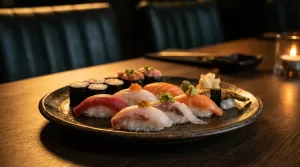
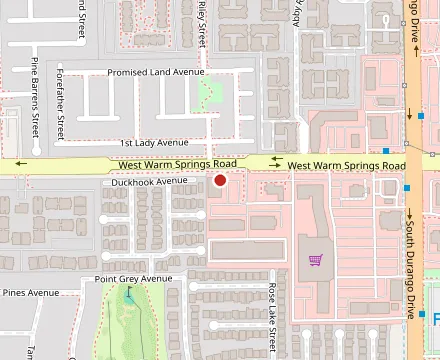
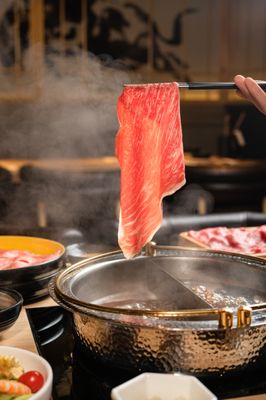
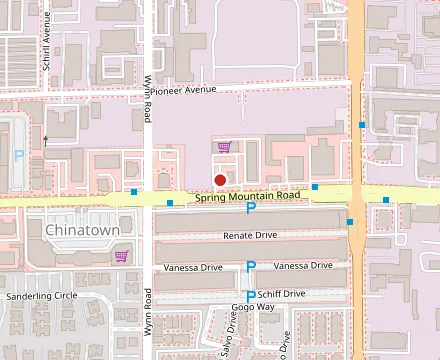
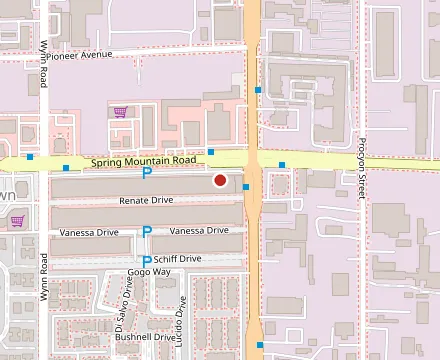
From the Spring Mountain Road corridor to the Arts District, Las Vegas runs 1,840 restaurants deep. These 50 earned their ranking by volume and consistency, not by address.

Las Vegas is not one dining city. It is a 600-square-mile valley where pan-Asian cooking concentrates along Spring Mountain Road, the Arts District has built a chef-driven independent restaurant culture, Henderson runs its own suburban food scene largely ignored by the Strip, and neighborhoods from North Las Vegas to the southwest valley carry cuisines the tourism economy never notices. The 50 restaurants ranked here were drawn from 1,298 establishments meeting the site's quality threshold, then scored on a 0-to-10 Insider Score that weights review volume against average rating, so a deep record of consistent performance beats a handful of perfect scores. The Strip is represented where it belongs. So is everywhere else.
The famous addresses hold their spots only where they earn them. Just as often, the kitchens at the top sit in a strip-mall plaza or a quiet neighborhood corner, rooms that never bought a billboard. That is not a thumb on the scale. It is what the numbers said, and we let them say it. The full method is public: read exactly how the score is built.
Biggest mover this week: Lawry's The Prime Rib, № 47.
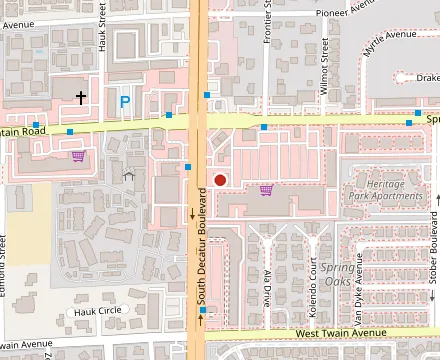
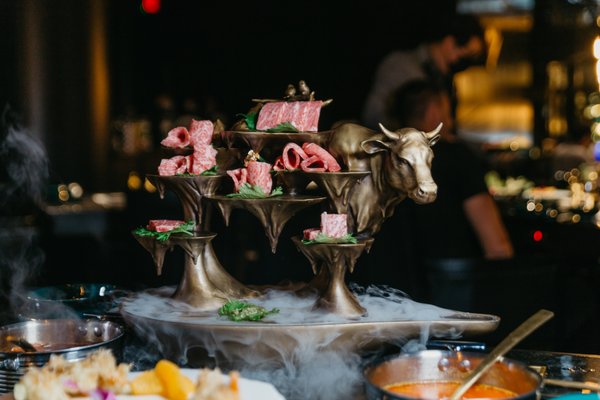
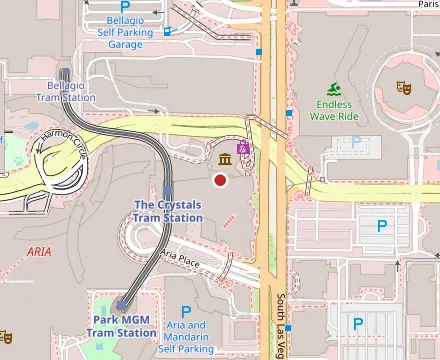
Chubby Cattle BBQ sits on the Spring Mountain corridor and runs one of the valley's most focused Japanese BBQ programs, anchored by A5 wagyu and tableside grilling at the upper end of the price range. The room operates as a full-service experience: servers engage directly at the grill, cooking portions without being asked, which is the operating signature here. That kind of tableside attention is what separates a Japanese BBQ room with real service culture from one that simply drops raw meat and walks away.
The A5 wagyu is the thesis of the menu. At this grade and at this price point, the kitchen's job is sourcing and execution, and both read as consistent. The Diamond package structures the meal as a progression through premium grilled cuts, which is the right way to approach a room like this, especially for a group that wants to move through the menu without negotiating every order. It is a designed experience, not an à la carte assembly.
Sushi runs alongside the grill program, which gives the room flexibility. A table can rotate between grilled wagyu and raw fish without the meal losing coherence. That dual program is not universal across Spring Mountain's Japanese BBQ rooms, and it broadens what the kitchen can do on a single visit.
The price reflects the product. A5 wagyu at tableside with attentive full service is an expense-account or special-occasion spend, and the room presents accordingly. Spring Mountain's density means alternatives exist at every price tier, but Chubby Cattle is playing in a different register than the mid-tier Korean BBQ rooms nearby. The clientele reflects that: group dinners, date nights, and visitors who have specifically planned around the wagyu program. The room earns its position on the corridor.
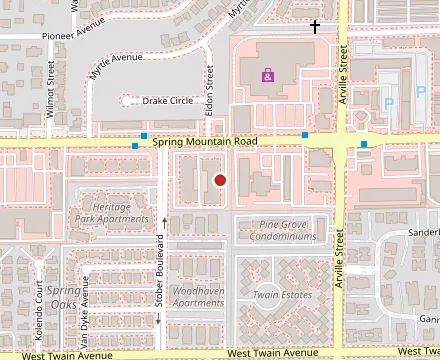
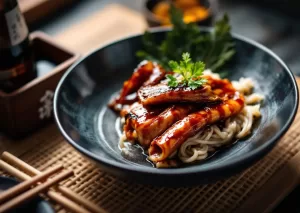
888 Japanese BBQ has staked out a clear position in the Chinatown corridor: all-you-can-eat Japanese barbecue that runs late, draws groups, and earns repeat visits on the quality of its beef. The room sits at the upscale end of the AYCE format, and the kitchen's sourcing bears that out. The beef arrives fresh, not frozen-to-order, and it grills cleanly over the table. That alone separates 888 from the more cursory AYCE operations on Spring Mountain.
The signature approach centers on a seasoned miso paste served alongside the beef selection, a combination that reads as the kitchen's house point of view rather than an afterthought condiment. Radish wraps give the beef a clean, bright counterpoint mid-meal. The spicy cucumber runs as an addictive side that earns its own reputation. These three elements together signal a kitchen that has thought through how the meal builds across multiple rounds, not just how to move protein.
The AYCE selection runs deep enough to sustain a long table without redundancy. The beef is the headliner and the reason the room gets called the best AYCE BBQ in the valley, but the breadth of the menu holds up through an extended group meal without forcing the same cuts on repeat. For a Chinatown corridor that now runs a serious AYCE Korean BBQ competition, 888's Japanese BBQ positioning fills a distinct lane.
The late-night operation matters. Spring Mountain's dining culture rewards rooms that stay open when the casino shift ends, and 888 services that demand. Group tables fill on both the dinner and late-night push. Service holds up across those covers, with staff that keeps the pace of a high-turn AYCE format without rushing the table off the grill. Upscale price point for the format, but the beef quality justifies it.
Paradise sits east of the Strip corridor, close enough to draw visitors who know to look but far enough that the room runs on a local base. 888 Sushi and Robata operates in that sweet spot: upscale Japanese without the Boulevard markup, portions sized for people who are actually hungry, and a kitchen that moves fast without sacrificing freshness.
The Seared Cajun Albacore Carpaccio is the room's signature statement. Cajun seasoning on albacore is a specific call, regional American heat pressed against Japanese knife work, and the kitchen makes the combination land rather than fight itself. The Salmon with Mango Salsa works a similar cross-register logic, tropical fruit acidity cutting through the fat of the fish. Both dishes signal a kitchen comfortable with fusion framing that does not feel tentative about it.
The S.O. Seared Tuna and yuzu yellowtail round out the heavy hitters. The yellowtail with yuzu is the more classical play, citrus brightness over clean, fatty fish, and it holds up alongside the bolder preparations rather than getting lost next to them. The through line across all four dishes is consistent product quality and a demonstrable commitment to freshness.
Portion scale is the room's most discussed operating characteristic. The ratio skews heavily toward fish and away from rice, which is a kitchen-side choice that reads as respect for the protein. Plates run large enough that the upscale price point holds up against what lands on the table.
Service is quick. The room turns with purpose, which suits the date-night crowd and the eastside regulars who want a proper dinner without a two-hour production. For off-Strip Japanese at this tier, the Eastside answer is here.
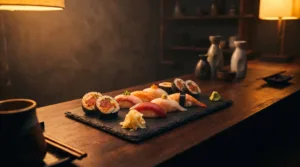
Smile Shota runs the all-you-can-eat sushi program the Spring Mountain corridor demands: enough volume to satisfy a table of six, enough care in execution to keep the regulars coming back. Spring Valley sits just south of the Chinatown food spine, and Smile Shota operates in that zone where the everyday locals' room and the upscale-leaning dining experience find each other. The price point reads upscale for the format, but the AYCE structure means the value proposition is real if the table commits to the evening.
The lemon salmon is the signature order, and it earns that status. The brightness of the preparation sets it apart from the standard salmon nigiri rotation, and the repeat-visit record from regulars suggests it holds up across visits rather than peaking on first encounter. The super Philadelphia roll rounds out the short list of things to order by name: a familiar format executed well enough that it gets cited alongside the lemon salmon as a reason to return. The AYCE menu gives the table room to explore beyond those anchors, but those two dishes function as the reliable through-line regardless of how broadly the group orders.
Service is the room's clearest differentiator. Named servers appear again and again as the reason a table came back, a pattern that points to a front-of-house operating at a standard above what the AYCE format typically produces. Attentive, friendly, and consistent across a busy table are the terms that define the experience here. For a format where service can easily become transactional, that floor-level care is a real competitive advantage.
Smile Shota draws groups: the AYCE structure is built for shared tables, and the late-night vibe tag means the room keeps going when other spots on the westside are winding down. The room is for diners who want serious sushi volume with service that makes the evening feel like more than a transaction.
Sumo Sushi sits in the southwest valley's competitive sushi corridor, where all-you-can-eat sushi counters stack up at nearly every intersection. Earning return visits in that landscape requires more than a tiered pricing sheet, and Sumo makes its case on range and execution. The AYCE program runs deeper than most local competitors on variety, which matters: the difference between a forgettable AYCE room and a useful one is usually how many rolls a kitchen will actually commit to rather than list and avoid.
Specialty rolls are the real test of an AYCE program, and Sumo's selection holds up where others pad the count with low-effort options. Nigiri gets its own moment here, which is rarer in the AYCE format than it should be; the selection is broad enough to satisfy the diner who came for the fish itself rather than just the production of a roll. The room operates as a full-service table-service format, and the floor staff moves at a pace that keeps the AYCE experience from stalling into the long waits that kill the format elsewhere.
The late-night window extends the room's utility in a valley where casino-worker schedules and post-event dining create real demand past 10 PM. At an upscale price point for the AYCE format, Sumo positions above the budget strip-mall competition; what justifies that positioning is the combination of variety, service pace, and a room that reads as a destination rather than a fallback. Family-friendly across the board, casual enough that the table doesn't feel like an occasion, but put-together enough that it works for one.
Mikiya Wagyu Shabu House runs a focused, premium shabu-shabu program on the Spring Mountain corridor, where the floor is dense with Japanese specialists and the bar for hot pot is set high. The concept is straightforward and the execution earns its price: quality wagyu beef, cooked tableside in broth, pulled through ponzu or sesame dipping sauces. Both sauces are central to the meal, not afterthoughts. The ponzu cuts through the fat with acid; the sesame adds depth. The wagyu itself is the throughline, and the kitchen is built around it.
The room skews toward groups. Shabu-shabu is a shared-table format by nature, and Mikiya calibrates the experience to a party that wants to let the meal run. Friday evenings at 7 PM draw serious waits, a two-hour stretch by some accounts, which is its own kind of verdict on the room's standing in the neighborhood. Planning ahead, or arriving early, is the operating rule.
This is not a quick-turn counter. It is an upscale hot pot room where the pace is part of the point. The service reads as attentive and invested, the kind of floor that checks in without hovering. For Spring Mountain, where the competition in Japanese cooking runs from izakayas to ramen specialists to omakase counters, Mikiya holds a specific lane: premium hot pot for the table, not the solo diner. The price reflects the wagyu program, and the regulars, the groups who come in specifically for the wagyu, have clearly made their peace with it.
Mikiya also has a San Diego location, which suggests a small multi-location operation with a consistent concept rather than a one-off. The Las Vegas room carries the same program. That consistency across markets is a reasonable signal that the kitchen knows what it is doing.
The Spring Mountain corridor runs deep with Korean BBQ rooms, and 888 Korean BBQ has staked its claim at the upscale end of the AYCE format. The concept is Kobe-style all-you-can-eat, which means the beef program runs well above the standard corridor offering, and the kitchen backs it with seafood that holds up on its own terms. Grilled squid and shrimp are the standouts of the non-beef side, fresh enough that the seafood doesn't read as filler. The sushi rounds out the spread and clears a bar that AYCE programs rarely clear.
The room operates at volume. Two-hour waits are the norm on peak nights, and the house has built an online check-in system around that reality. Groups who plan ahead and queue remotely get to the table with less friction; groups who walk up cold absorb the full wait. The floor moves efficiently once seated, with service that stays on top of the grill rotation and the pace of the table. For a high-covers format, the organization reads as practiced.
The price point lands in upscale territory for an AYCE room, which positions 888 in the tier where the cuts justify the check rather than the concept alone. This is a room built for groups willing to commit to the format and the wait, not a solo counter stop or a quick-turn dinner. Late night is part of the operating identity, which fits the corridor's rhythm and the casino-worker dining culture that keeps Spring Mountain running past midnight.
For the Spring Mountain Korean BBQ scene, 888 holds a clear position: the room that runs Kobe-style beef, fresh seafood, and a sushi program inside a single AYCE format, at a price point that reflects the ambition. The wait is the only tax, and regulars have figured out how to pay it.
Chubby Cattle sits in Spring Valley running a format that rewards time: hot pot and tableside barbecue, handled by a floor staff that earns its keep by walking first-timers through the process without rushing them toward the door. The room lands in the upscale tier, and the menu reflects it. Wagyu beef is the anchor order, arriving with the kind of marbling that justifies the price point and reads as the kitchen's clearest statement of intent. Grilled beef short rib extends the barbecue side of the program, a cut that takes well to tabletop fire and gives the meal a different register than the broth-based courses.
The hot pot itself is the structural reason to come. A long evening at a hot pot table is a communal format by design, and Chubby Cattle's floor staff handles the guided-service requirement well. Patient explanation of the menu is a recurring operational note: servers walk the table through broth choices, dipping options, and cooking times rather than dropping items and disappearing. That operating pattern matters in a format where an uninstructed first visit can go sideways fast.
Spring Valley runs west of the Strip and south of the Chinatown corridor on Spring Mountain, home to some of the valley's densest Chinese dining. Chubby Cattle sits in that broader ecosystem but positions itself toward the upscale end, drawing diners who want the communal hot pot and barbecue format without sacrificing service quality. Late-night hours extend the window for the casino-worker and industry crowd that keeps this part of the valley eating past midnight. The room functions as a destination for groups willing to settle in for the full experience rather than a quick turn. Budget accordingly: wagyu at a hot pot table adds up, and the format is not designed for speed.
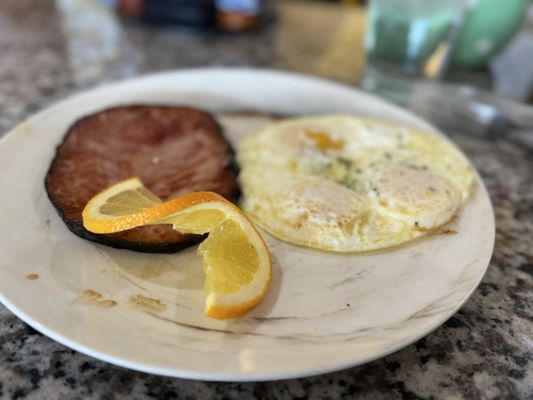
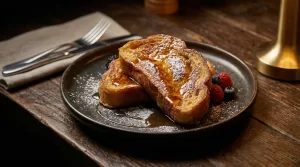
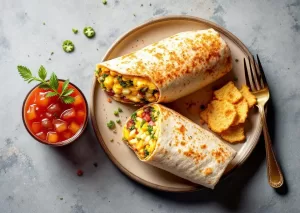
Eggscellent runs on the kind of menu that makes a decision easy: order the breakfast burger or the egg scramble and move on with the day. The scramble reads as the anchor dish, the one a kitchen builds a breakfast reputation on, loaded enough to work as a full plate rather than a side thought. The breakfast burger does the thing a lot of brunch rooms fumble: it treats egg and patty as equal partners instead of stacking an egg on a burger as an afterthought. French toast rounds out the menu for the table that wants one savory order and one sweet one, which is how most parties actually eat brunch.
The room sits in Paradise, on the Eastside grid that runs between Flamingo and Sahara, away from the Strip's breakfast markup and closer to the apartments and offices that keep a neighborhood spot fed on weekday mornings. That geography matters here: this is not a room built for a two-hour Strip buffet crawl, it is built for the regular who wants eggs before work and the weekend crowd that shows up for brunch without a reservation. The color and layout of the dining room get noticed by first-timers, and the service runs attentive enough that newcomers leave with a recommendation for next time, which says a scratch-built local room, not a chain rotation. Pricing lands moderate, which puts it solidly in the neighborhood-breakfast tier rather than the hotel-brunch tier.
Weekends run busy, which tracks with a spot that has built a following past just the immediate block. For an Eastside local wanting a real breakfast without crossing toward the Strip, or a visitor staying nearby who wants an actual plate instead of a buffet line, this is the room that handles both without treating either as an afterthought.
Gangnam Asian BBQ Dining sits in Paradise and runs the kind of room that the valley's Korean-Japanese BBQ crowd has been looking for off the Strip: upscale table grills, serious cuts, and hours that hold late into the evening without the Boulevard markup. The format is yakiniku-meets-Korean BBQ, and the kitchen stocks accordingly. Galbi arrives as properly marbled short ribs, the Korean-American benchmark cut, and the table grill does the work from there. Wagyu beef yakiniku is the room's most deliberate statement about what kind of BBQ program this is: the sourcing signals intent, and the per-table cooking format keeps the quality legible.
Samgyeopsal, the grilled pork belly, rounds out the Korean side of the menu with the fatty, char-edged result the cut is built for. The Japanese-Korean dual register is a real distinction in the valley's BBQ landscape. Spring Mountain has the Korean specialists; the Strip has the showpiece wagyu rooms. Gangnam occupies a different lane, blending the two traditions in a room that reads as date-night capable without abandoning the group-dining infrastructure the format requires.
Paradise, east of the Strip and out of the tourist corridor, keeps the prices grounded relative to comparable Strip BBQ rooms while holding the upscale build-out. Late evenings are when the room finds its rhythm. The combination of a serious cut list, table grills, and hours that run past the dinner window makes it a credible destination for the valley's hospitality and casino workforce eating late, and for the broader city crowd that knows where to find BBQ at that hour without overpaying for the zip code.
Kabuto sits at the top end of the Spring Mountain corridor's price tier, running a prix-fixe omakase format in a room built for that specific transaction. The concept is focused: a set progression of nigiri and sashimi, chef-selected and seasonally driven, with supplemental courses available for those who want to extend the sequence. The fish quality is the argument the room makes for itself, and the argument holds. The nigiri arrives precut and placed by the chef, each piece reflecting sourcing decisions made before service rather than improvisation at the counter. That precision is the point.
The seasonal sashimi selection shifts with what the kitchen is buying, which means the menu reads differently depending on when a table sits down. Spring Mountain runs deep enough in Japanese and Japanese-adjacent dining that a room has to justify its price; Kabuto's justification is the sourcing and the format's discipline. The prix-fixe structure removes negotiation from the meal and asks the diner to trust the progression. At the $75-per-person entry tier, that trust is the product.
The corridor around it is dense with capable Japanese cooking at lower price points, which sharpens the question every omakase counter in Chinatown has to answer: does the experience justify the gap. Kabuto's answer is the quality of the protein and the tightness of the format, not spectacle or tableside theatre. The room draws celebrations, anniversaries, and the kind of occasion where the price point is part of the signal. Walk-in availability at a counter of this caliber is the exception rather than the norm; the operating pattern reads as a reservations room. The supplemental courses allow guests to build past the base menu, which is the right move for anyone treating the meal as a full evening rather than an efficient dinner.
Hobak Korean BBQ operates on Spring Mountain Road, the corridor that anchors the valley's off-Strip dining identity, and it runs the tabletop-grill format the way the format is meant to run: fresh cuts ordered by the piece, not by the buffet tray. The room sits in Spring Valley, close enough to the Chinatown corridor that it draws the full cross-section of the local Korean BBQ audience, from families working through a combo order to groups making an evening of it cut by cut.
The beef short ribs are the anchor order. The tabletop grill delivers them with the char and fat rendering that make the cut worth the price point, and the freshness of the meat is the thing that separates a serious Korean BBQ room from an afterthought one. Pork belly runs alongside, and at the tabletop it holds its own as a second centerpiece rather than a filler option. The Korean BBQ combo is designed for the table that wants range without navigating the full menu cold, and it scales: the smaller configuration handles two adults and two children without waste, which is the test of a combo that was actually thought through.
The price sits at the upscale end of the Spring Mountain spectrum, and the room earns it through the quality of the protein program and the full-service format. Banchan rounds out the table in the Korean style. The meal ends with ice cream sandwiches, a closing move that registers as genuine hospitality rather than a cosmetic touch. Staff are attentive and the pace of the room lets the table control its own grill time.
For groups who want to order by cut and sit with it, Hobak holds its position on a corridor that takes Korean BBQ seriously.
The X Pot sits in the Strip-adjacent Paradise corridor and operates as a high-end hot pot experience built to compete with the room's price tag. The format is interactive dining: guests select from a range of broths, then work through the table with wagyu beef and seafood platters assembled and cooked at the table. The kitchen's job is sourcing and setup; execution lands in front of the diner. That dynamic requires the room to function as a guided experience, and service here carries real weight.
The broth program is the foundation. Multiple options are on offer, and navigating them benefits from direction. First-timers report that the servers who know the menu well make a measurable difference in how the meal lands. The wagyu beef is the prestige order, the kind of protein that justifies the price point when handled correctly. The seafood platters extend the spread and keep the table moving through multiple courses of cooking.
The room runs upscale and reads as a destination for date nights and celebration dinners rather than a casual drop-in. The price is high-end and the experience is calibrated to match: attentive tableside service, a structured progression through the meal, and a kitchen program built around premium proteins. Late-night availability makes it a viable option for the Strip's service-industry crowd after a shift elsewhere.
The X Pot sits in the larger Las Vegas hot pot landscape, which runs deepest in the Spring Mountain corridor, but this room is after a different audience. It is Strip-adjacent dining that earns its positioning by treating the interactive format seriously rather than using it as spectacle. The room is for guests who want the communal cooking experience with full-service attention and are prepared to pay for it.
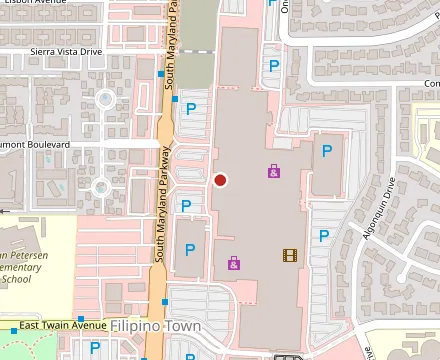
Primal Steakhouse sits in the Maryland Parkway corridor, east of the Strip, where the visitor traffic thins and the rooms that survive do so on actual cooking and actual service. This one has built a following on both. The concept leans into a medieval, Game of Thrones-adjacent aesthetic without letting the theme swallow the meal. The room has a point of view, it doesn't belabor it, and the kitchen delivers the food that a serious steakhouse is supposed to deliver.
The dry-aged steak is the reason to be here. Dry-aging is a commitment, a controlled process that concentrates flavor and transforms texture in ways wet-aging cannot replicate. At Primal, the process reads in the finished plate: a deep, mineral-forward beef flavor and a crust that holds. The surf and turf pairing extends the program beyond the single-protein format, and the combination signals a kitchen that understands the occasion-dining expectations its clientele brings through the door. Signature cocktails round out the program, calibrated for a room where the meal is the event and the drinks are part of the arc, not an afterthought.
Service is the other engine here. The floor staff runs attentive and personable without crossing into performative. The guest experience is clearly a managed priority, and the consistency of the service pattern across the room is what separates a special-occasion room from one that merely aspires to be. At the price point Primal operates, service failure is the fastest way to lose the room; this kitchen and floor have avoided that.
Pricing runs high-end, as it should for dry-aged beef and full table service east of the Strip. The value case rests on the totality: the cut, the execution, the cocktail program, and a floor that makes the evening work. For a destination steakhouse meal that doesn't require a casino resort surrounding it, the Maryland Parkway address is the point.
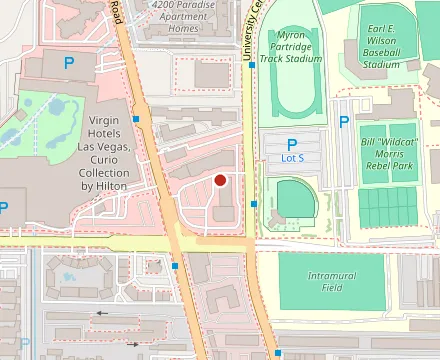
Kame Omakase operates in the Chinatown corridor on Spring Mountain Road, the stretch that has become the valley's most concentrated address for serious Japanese cooking. The room runs a chef's counter format, which means every seat faces the kitchen and the sequence belongs to the house. That operating pattern sorts out who this room is for before the first course lands.
The otoro nigiri is the clearest signal of what the kitchen is after. Fatty tuna at this level costs money and demands precision; the room delivers on both. The uni nigiri follows the same logic: sourcing-dependent, execution-sensitive, the kind of course that earns or loses a kitchen's credibility fast. The wagyu course closes the picture. These three alone account for why the room earns its price point, which sits at the high end of Spring Mountain's already strong Japanese scene.
Service runs tight. Water glasses stay full without prompting; the floor reads the table and acts ahead of it. That kind of attentiveness is not accidental at a counter-seat room where every diner is in plain view. The pacing reflects it too, the kind of unhurried progression an omakase format requires to land correctly.
The room has a regulars base, which is the surest sign a high-end counter is doing its job. Regulars at omakase pricing are earned, not given. The intimacy of the counter format, the interaction with the chefs, the sense that the meal is a conversation rather than a transaction, all of it comes through in how the room is described by people who return.
For the valley's Japanese scene, Kame sits at the serious end of what Spring Mountain now carries. The counter is bookable any night of the week, which on this corridor is a practical detail worth noting.
Carson Kitchen is one of the founding restaurants of the modern Downtown food scene, opened in 2014 by the late Kerry Simon, and the room has held its position on Fremont East long enough to become the benchmark against which newer arrivals get measured. That kind of longevity in a 24-hour town is its own argument.
The menu is New American gastropub, executed with enough precision to justify the repeat business. The pot roast dip is the anchor: braised beef, the dripping folded back in, served for dipping in a format that borrows from the French dip tradition but reads as distinctly its own thing. It is the order that keeps appearing across the record and the one that best communicates what the kitchen is doing. The gyro tacos work a similar move, pulling from a different tradition and landing somewhere that feels specific to this room. The baked mac and cheese runs as the comfort-food anchor of the menu, the dish that rounds out a table sharing multiple plates. Tempura green beans show up regularly as a supporting order worth adding.
The bar program contributes meaningfully to the room's identity. The drinks are substantial and the bar staff has built a following, which is consistent with a Fremont East room that draws both pre- and post-show traffic from the Smith Center nearby. The patio gets used when weather allows; the indoor room carries the load on busier nights.
Pricing is moderate for the neighborhood and the format, which means Carson Kitchen functions as an accessible Downtown dinner rather than a special-occasion destination. It draws locals, it draws visitors staying off-Strip, and it draws the Smith Center crowd looking for a reliable room before or after a show. The formula has worked for over a decade.
Partage sits in the Chinatown corridor on Spring Mountain Road and runs one of the valley's most committed French kitchens at a price point that earns its place in the high-end tier. The room is built for the long meal, the kind of dinner that doesn't hurry, and the cooking backs that operating character at every course.
The duck confit is the dish that defines the kitchen's orientation. Proper confit is a patience exercise, and the version here comes through in the record as consistently rendered, the fat rendered through, the meat pulling clean. It is the French provincial standard done without hedging.
Beef bourguignon is the second signature and the one that most plainly states the kitchen's argument. The long braise, the wine reduction, the depth that only comes from time on the heat. In a city where French restaurants have often arrived as Strip showpieces with celebrity branding, a room doing bourguignon at this level off the Strip is its own kind of statement.
The crème brûlée closes the meal as it should, without elaboration. The record reads as consistent and properly executed: clean custard, the caramelized top holding its crack. The pastry program doesn't overreach, which in its own way is a form of discipline.
The Chinatown corridor is Spring Mountain's densest restaurant stretch, and Partage operates in it as the outlier, a French room in a pan-Asian neighborhood. That placement keeps the tourist traffic thin and the dining room populated by people who came specifically for this kitchen. Upscale pricing, but the room operates at a pace and register that makes the spend feel considered rather than inflated. For a full French dinner off the Strip, it holds its lane with authority.
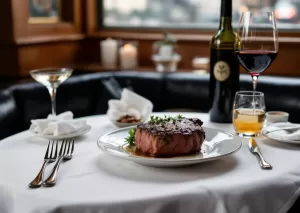
Bavette's Steakhouse & Bar brings a specific and well-defined register to the Strip: the Chicago-lineage steakhouse, built around low lighting, red leather booths, and oak millwork that signal a room that knows exactly what it is. The aesthetic is deliberate and the kitchen operates accordingly. This is not a modernist experiment or a celebrity-chef concept chasing the next idea. It is a room committed to doing the classic program correctly, and the evidence from the plate outward supports that commitment.
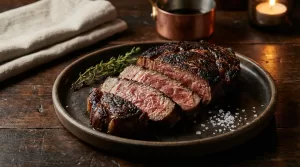
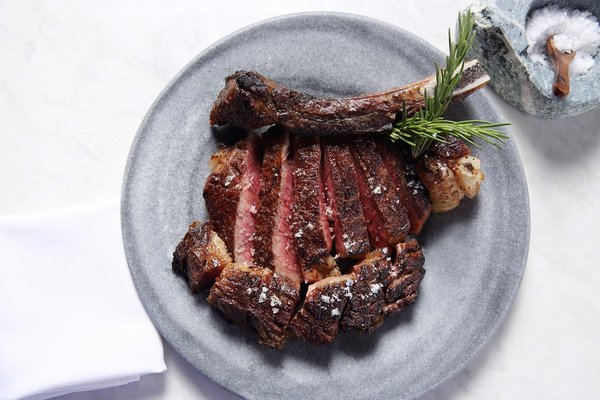
The dry-aged ribeye is the anchor. Dry-aging is a kitchen discipline that requires time, controlled conditions, and a willingness to lose product weight for the sake of flavor concentration and texture. The result here earns its reputation as the centerpiece of the menu. The bone-in filet mignon runs alongside it as the alternative for those who want tenderness over the assertive, funky depth that dry-aging produces. Both cuts perform at the level the room's price point demands.
The kitchen's range extends past the beef program. The branzino draws consistent notice as one of the stronger non-steak options on the menu, which matters in a room where the seafood column often functions as an afterthought. The lobster cocktail anchors the cold opener side, and the wedge salad, a dish that rewards the kitchen willing to source and dress it precisely, reads here as the best version of itself rather than a pro forma menu entry.
Price runs high-end, consistent with Strip placement. The room is built for a dinner with stakes: the occasion meal, the expense-account table, the date night that benefits from a room with settled confidence rather than a concept still finding its footing.
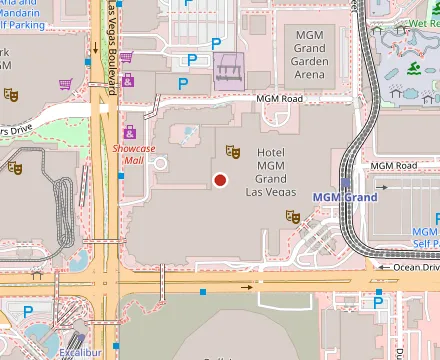
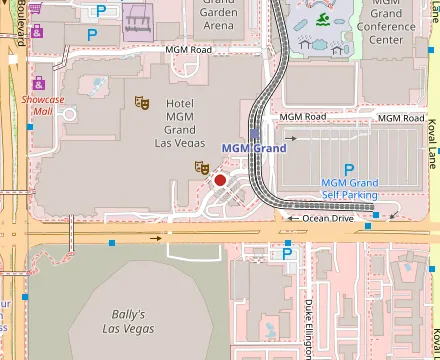
Joel Robuchon at the MGM Grand is the Strip's most formally committed tasting room, a place where the length and the price are not incidental but structural. The operating pattern is fixed: multi-course tasting menus, full-service pacing, a room calibrated for the kind of occasion that justifies both. The pomme purée is the kitchen's thesis statement, a preparation so studied and so simple that it registers as a declaration of technique. The langoustine royale advances the same argument in more elaborate terms, a composed dish that demonstrates what French haute cuisine does when it decides to perform at full register. Le caviar arrives as its own event, the kind of line item that signals the program is running without compromise.
Accommodations for dietary restrictions run deep enough that a full tasting menu can be navigated without meat, which speaks to the kitchen's range. Thirteen courses is the operating rhythm for a full evening, and the room treats that length as the correct length, not an excess. For Las Vegas context: the Strip has accumulated marquee French rooms over the years, but Robuchon's standard is its own tier. The room is inside a casino, but it operates as though the casino floor does not exist. Occasion dinners, anniversary dinners, the bucket-list meal that someone has been planning for years, this is the room for those.
The price is the honest price for what the kitchen delivers, and the room doesn't obscure that. Reservations are essential; this is not a walk-in room under any ordinary circumstance. The full tasting menu is the correct approach; à la carte is available but the room's logic is built around the longer format.
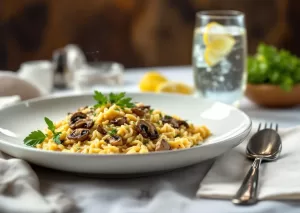
Al Solito Posto is James Trees's refined Italian-American room in Tivoli Village, and it operates at a register distinct from anything else the Westside offers. Trees built his reputation in the Arts District with Esther's Kitchen; this is the other side of that coin, a room calibrated for celebration dinners and date nights rather than neighborhood pasta runs. The menu anchors on pasta executed with discipline: cacio e pepe reads as a kitchen that understands the dish is nothing but technique, and the mushroom risotto turns what is often a test of patience and fat content into something the table keeps returning to. Neither dish needs ornament.
Both say something about where the kitchen's priorities sit. Pasta more broadly is the through-line here, with the same consistent hand across the board. The room runs at a volume that allows two people to hear each other, which is not a given in Summerlin dining and is, in practice, a meaningful operational choice. Service is attentive without the hovering that upscale rooms sometimes mistake for hospitality.
Tivoli Village situates it outside the Strip's orbit entirely, in a master-planned retail corridor that draws Westside residents who want a serious dinner without the commute across the valley. The price point signals occasion dining rather than a weekly regular, but the kitchen delivers at that tier. For visitors staying in the resort corridor who want off-Strip Italian without a long drive, it functions as the kind of room that holds up to scrutiny the morning after. The Trees lineage is real, the execution matches the pedigree, and the room knows what it is.
Gordon Ramsay's Hell's Kitchen on the Strip is the rare celebrity-chef room that justifies the premise. The concept is built on the television show's mythology, but the kitchen operates at a level that stands independent of it. This is a high-end New American room where the signature dishes carry real weight and the execution reads as consistent across the volume it runs.
The Beef Wellington is the anchor. The dish has a long lineage in Ramsay's cooking, and this version delivers the technical standard the record demands: pastry, duxelles, and beef holding together as a composed thing rather than a tourist placeholder. The Lobster Risotto runs alongside it as the room's other marquee plate, a dish that asks for precise timing and consistent quality on the protein, and by the record it delivers. Pan-Seared Salmon rounds out the signature trio, positioned as the accessible entry to the program, and it holds its own against the heavier plates.
The room operates at Strip pace and Strip volume, which means it turns tables, fills early, and draws a crowd that ranges from anniversary dinners to first-time visitors working through a bucket list. Service lands above the Strip average, which matters at this price point. The holiday menu and wine pairing program have drawn specific notice, suggesting the beverage program is thought through rather than bolted on.
The setting is inside Caesars Palace, which puts it in the middle of the Boulevard. Paradise by address, Strip by reality. The price is high-end by any measure, and the room asks the diner to meet it there. What keeps it credible is that the kitchen mostly does.
Bar Boheme operates as a contemporary French room in the Arts District, the James Trees venture that brings a European brasserie sensibility to the 18b corridor. The room sits at the upscale tier without the Strip markup, which is exactly where the Arts District has been building toward since Esther's Kitchen opened the template in 2018.
The foie gras terrine is the anchor dish and the clearest statement of intent. Deep, rich, and handled with the care a terrine requires, it signals a kitchen that takes the French program seriously rather than using French as a branding move. Charcuterie rounds out the opening moves, a natural pairing for a bar-forward French room where the evening tends to unspool at an unhurried pace. The French entree of the day rotates, which keeps regulars returning and keeps the kitchen honest on execution from one service to the next.
Service reads as a genuine strength. Knowledgeable staff who understand the menu and carry it without condescension are not a given at this price point in Las Vegas, even off-Strip. The front-of-house polish here matches the kitchen's ambition, which is what separates a room with good food from a room that actually works.
The Arts District context matters. Bar Boheme benefits from the neighborhood's walkable density, the kind of room that makes sense as a destination or as a second stop after something nearby. The Italian place down the street books out; Bar Boheme is the alternative that turns out not to be an alternative at all. The price reflects the upscale tier, appropriate for a date night or a deliberate occasion, but the room does not require a special occasion to justify the visit.
For a French room at this level off-Strip, the value calculation runs in the diner's favor.
Joe's Seafood Prime Steak & Stone Crab is the kind of room that treats every table like an occasion. The Strip address and the high-end price point are not pretensions; they are the contract this kitchen has kept since the original Miami Beach location established the format decades ago. What Joe's sells is a very specific thing done at a very high level: stone crab claws, prime steak, and the service infrastructure required to hold a celebratory room together on a busy Friday night.
The stone crab claws are the signature and the reason the room exists in Las Vegas at all. Cracked tableside, served cold with mustard sauce, they are the order that defines the menu and the visit. The stone crab bisque extends the same ingredient into a first course that earns its place on the menu independently. Together they give the kitchen a clear identity in a city where seafood rooms can blur into one another.
The prime steak side of the menu is not an afterthought. Joe's runs a genuine dual program: the seafood operation and the steakhouse operation coexist without either undercutting the other. That balance is harder to execute than a single-concept room, and the consistency across busy nights is what separates a kitchen with real discipline from one coasting on a name.
The room handles occasion dining well. Reservations are essential; the front-of-house operates with the kind of polish that recognizes a birthday without being told twice. The location places it on the Strip, which means the room draws both visitors and locals marking something worth marking. The price reflects it. For seafood at this level in Las Vegas, Joe's is the established room against which others get measured.
Esther's Kitchen is the restaurant that proved the Arts District could support a serious Italian room. Chef James Trees opened it in January 2018 on California Avenue, relocated to a larger space on Main Street in 2024, and the room has held its position as the neighborhood's anchor ever since. The pasta program is the core argument. Cacio e Pepe is the benchmark dish for any Italian kitchen running it, fat, starchy pasta water, Pecorino, black pepper, nothing to hide behind, and Esther's version earns its reputation as the one locals point newcomers toward.
Spaghettoni alla Gricia is the same school of thought: rendered guanciale, Pecorino Romano, black pepper, the kind of dish that collapses with any lapse in timing. Both are on the short, focused menu that signals a kitchen working from a clear point of view rather than hedging across cuisines. The wood-fired pizza rounds the top tier. The oven does what wood-fired ovens are supposed to do, the crust has the char and the pull that a deck oven cannot replicate, and the toppings read as restrained rather than loaded.
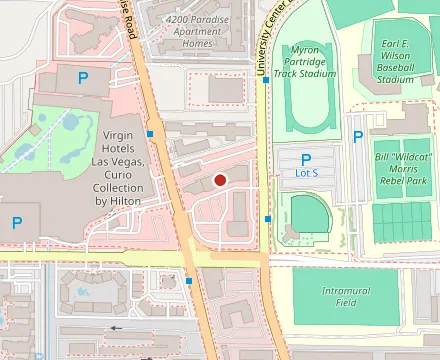
Trees spent years cooking under Michael Mina and others before returning to Las Vegas to open this room. The Italian-American pastoral here is not nostalgia; it is a chef who knows the canon working it on his own terms. The room runs busy. Thursday afternoon draws a crowd; weekend evenings book out.
The Main Street space is larger than the original California Avenue location, but the volume is real, and the service pattern reflects a kitchen moving at speed. Moderately priced for the neighborhood and the cooking level. The room draws locals on date nights and regulars on weeknights, not the convention crowd. That is the point.
The room seats eight. That is the operating premise, and everything else follows from it. é by José Andrés runs as a chef's counter experience inside the Cosmopolitan, a single seating at a time, built around a tasting menu that currently runs to roughly twenty-one courses. The format is the point: no ambient room noise, no adjacent tables, no calendar-filler crowd. The kitchen is performing for one party per seating, and the showmanship that brings reflects it.
The cuisine lands squarely in the molecular gastronomy tradition Andrés brought from his years in Ferran Adrià's orbit. Technique is the primary language here: spherification, temperature play, textural transformation, preparations that arrive looking like something other than what they are. The kitchen's command of those techniques is evident across the arc of the menu. Execution reads as precise and consistent, which at this format and price point is the baseline expectation and is met.
The honest calibration is this: the restaurant prioritizes technique, and diners who want that conversation at the highest level will find it here. Diners who want technique in full service of flavor above all else may find the balance tilted. The Steak course, among the savories, draws particular attention as a grounding point in the menu's progression.
Staff knowledge of each course runs deep, and the presentation of each dish is part of the service. At a twenty-one course table the pacing and the explanation are structural elements of the experience, not decorations around it. The room delivers on both.
Price is high-end, and the reservation structure reflects that. This is a special-occasion room in the most literal sense: the format does not allow for casual drop-ins, the commitment is the evening, and the cost reflects the ratio of kitchen labor to covers served. Within the Strip, there is no comparable format at this scale of ambition. The room earns its place at the top of the special-occasion shortlist on the terms it sets for itself.
Good Pie has the address right: the Arts District, where the independent restaurant culture James Trees helped build has made room for exactly this kind of neighborhood pizza operation. The room runs casual and late on weekends, the kind of place that absorbs the after-bar crowd from Fremont East without becoming a tourist trap or losing the regulars who were there first.
The Johnny is the signature whole pie, and it draws the kind of loyalty that sends people straight from the airport. That pull matters in a valley pizza scene that has grown serious, with Detroit-style, Neapolitan, and East Coast transplants all staking claims across the corridor. Good Pie holds its own. The pizza by the whole pie is the operating model that makes sense here: a room built around the full experience, not a grab-and-go slice counter, though the Arts District slice exists for the walk-up crowd navigating the neighborhood.
Moderately priced for the Arts District, which means it lands in the accessible range without the strip-mall informality of the deep corridor sleepers. The pricing fits the room's role as an everyday local anchor rather than a special-occasion destination. It draws the kind of crowd the Arts District generates: regulars who live nearby, people working through the bar circuit on a Friday, the occasional traveler who planned ahead.
Late-night availability on weekends earns its place in the 18b ecosystem. The Arts District after dark needs this kind of room. Carson Kitchen handles the American eclectic side of that equation; Good Pie handles the pizza side. The staff reads as engaged enough that the room retains first-timers. For a moderately priced neighborhood pizza operation in a neighborhood that earns serious attention from the valley, that consistency is the real verdict.
Vic & Anthony's operates as a full-commitment steakhouse in the Downtown corridor, a room built for occasions that require a proper dining room rather than a hotel lobby backdrop. The cuisine lands in the American steakhouse tradition with surf-and-turf as its defining signature, and the kitchen earns its price point through the quality of what it puts on the plate.
The Wagyu steak is the anchor of the menu, the reason the room fills on birthdays and anniversaries. It runs alongside lobster tail as a combination order, and the pairing is the move here, a steak-and-seafood format the room has clearly built its identity around. The surf-and-turf execution reads as consistent across the occasions that bring people in: the beef treated with the seriousness the cut demands, the lobster arriving as complement rather than afterthought. For a room at this price tier in Downtown Las Vegas, that consistency is the metric that matters.
The room itself runs dim and clean, the kind of lighting calibrated for celebration rather than scrutiny. Reservations are honored at stated times, which at a high-end Downtown steakhouse is a baseline that some rooms fail to meet. The front-of-house runs with real service polish: attentive without crowding, paced for an evening that does not rush. The waiting area draws a crowd on busy nights, so arriving on time is worth the trouble.
Downtown steakhouses occupy a different position than their Strip counterparts. The expense-account energy of Las Vegas Boulevard does not fully penetrate this far north, and the room draws a mix of locals marking occasions and visitors who want the steakhouse format without the Strip markup. Vic & Anthony's fits that position well. The price is high-end by any measure, but the kitchen delivers the Wagyu and lobster combination at a standard that justifies the check.
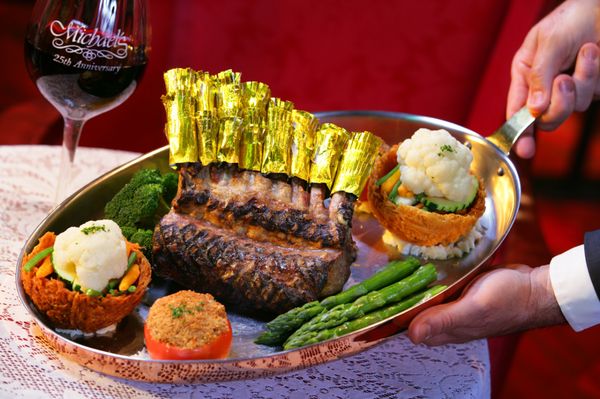
Michael's Gourmet Room is one of the few remaining rooms in the valley that treats dinner as an occasion unto itself, not a backdrop for a photograph. The operation traces its lineage to the Barbary Coast, which puts it in the rare company of Las Vegas dining rooms that survived the Strip's wholesale reinvention and kept the original program intact. That continuity is the first thing to understand about the place.
The kitchen anchors itself to a short roster of classical preparations. Dover sole is the signature, the kind of tableside fish service that requires real skill and real patience from the floor. Prime steak occupies the other half of the menu's identity, cut and cooked to the standard a high-end room can be held to. Baked Alaska closes the meal the way the room opened it, with deliberate, unironic ceremony. These are not dishes that announce a new direction; they are dishes that hold a position.
The room sits in Enterprise, in the southwest valley, which makes it a destination rather than a walk-in. Guests plan this dinner. The pricing is high-end and the room makes no apologies for it. What it offers in return is a pace that does not hurry the table, service that reads as genuinely attentive rather than mechanically correct, and a commitment to the kind of formal dining that the celebrity-chef era made unfashionable and time has made scarce.
For a birthday, an anniversary, or any occasion that justifies the spend, the room delivers. For diners who remember when this style of fine dining was the valley's standard for a special night, Michael's is less a discovery than a reminder that a few of those rooms survived.
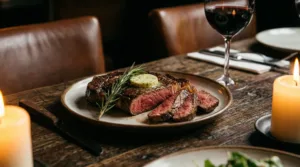
Scotch 80 Prime operates at the register where a Las Vegas steakhouse is expected to earn its price point, and by most accounts it does. The dry-aged program is the anchor. Dry-aging concentrates beef flavor in ways wet-aged cuts do not, and a room that commits to it is making a statement about patience and process. The steaks here read as the main event, the reason the table was booked.
Seafood runs alongside as a credible secondary program, not an afterthought, which keeps the room useful for groups where the full-blooded carnivore and the fish-at-a-steakhouse contingent both need to land somewhere satisfying. The steakhouse sides hold their own. A steakhouse that treats its sides as serious work is one that understands the full plate, and the sides here draw their own attention. French onion soup has come up as a standout opening move, which signals a kitchen running a full-service program rather than coasting on the beef alone.
The bar is a destination in its own right. Regulars return for the bar program specifically, and the front-of-house attentiveness that draws them back is the kind that comes from long tenure and genuine craft. Service throughout reads as polished and calibrated to the occasion. The room works for occasions that call for a marquee dinner: family milestones, date nights where the setting needs to match the stakes, business meals where the bill is an afterthought.
The price is high-end without apology. Vegas runs plenty of rooms that make similar promises; Scotch 80 Prime is one where the dry-aged program gives the kitchen something specific to stand behind.
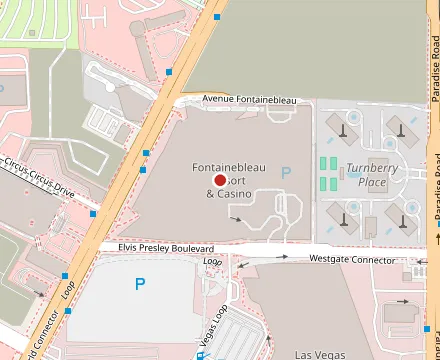
Don's Prime operates inside the Fontainebleau, one of the Strip's newer flagship properties, and it earns its place in that company. The room runs classic steakhouse in register: darker lighting, a formal service cadence, the kind of pacing that signals this is not a turn-and-burn operation. Large parties book here readily, with the room absorbing groups of a dozen or more without losing the occasion-dining feel that defines the concept.
The prime steak is the anchor. The kitchen delivers on the core promise of the format: properly sourced beef, cooked to spec, presented with the ceremony the Strip expects at this price point. The wedge salad reads as a deliberate callback to mid-century American steakhouse tradition, and it does its job without revision. The fresh seafood plateau is the room's clearest signal of ambition: a raw bar presentation in a landlocked desert city requires real commitment to cold-chain logistics, and the plateau lands as one of the more credible ways to open a meal in a Strip steakhouse of this caliber.
The Fontainebleau context matters. The hotel carries Michelin recognition for its dining program, and Don's Prime sits inside that infrastructure. It has received recognition as a steakhouse of note for 2024. These are facts the room does not need to announce loudly because the address does it.
Price is high-end, and the room makes no apologies for it. This is occasion dining: anniversaries, corporate dinners, the kind of celebration where the bill is secondary to the event. The Strip has no shortage of steakhouses competing for that spend; Don's Prime distinguishes itself by leaning into the old-school idiom rather than away from it. For a city that built its dining identity on exactly this kind of room, that is a defensible position.
Sinatra operates in a register Las Vegas has been refining since before the celebrity-chef era arrived on the Boulevard: the high-ceilinged Italian room built for occasion dining, where the lighting is low, the music is the namesake's catalog, and the menu runs classical Italian with the price point to confirm it. The room sits in Paradise, on-Strip territory, and it prices and presents accordingly.
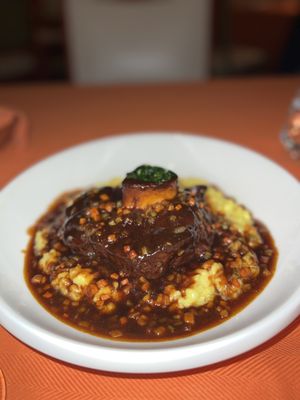
The veal ossobuco is the anchor dish, the kind of braise that defines what a kitchen like this is supposed to do: long-cooked, protein that yields cleanly, sauce with depth. The short rib and duck liver ravioli runs the opposite direction on the menu's register, pairing rich offal with braised beef in a house-made pasta pocket. House-made pasta across the board is the kitchen's clearest commitment, and the execution is where the room's ambitions are most legible.
The occasion-dining frame is real. This is a room where anniversary reservations show up at 9 PM after a show, where couples are doing the full Vegas-night arc. The FOH has figured out that clientele: service is polished, reservations run on schedule, and the room does not rush the table. That operational discipline matters at this price point.
The honest note from the record: the food does not always justify the check for guests who came primarily to eat rather than to inhabit the room. At high-end Strip pricing, the gap between execution and expectation narrows the margin for error. The ossobuco earns its place; not every plate on the menu does the same work. Guests arriving for the romance and the room will find exactly what they came for. Guests arriving because they want the best Italian in the valley should know the Strip premium is built into every course.
Amalfi is a Strip-side Italian room operating at celebration-meal prices, inside the territory where the valley's hospitality workforce and the tourist trade share the same floor. The room is built to impress, the design registers as beautiful on arrival, though the Amalfi Coast association is more nominal than evocative. Service runs at the level the price point demands, and that part of the contract holds.
The fish station is the room's anchor and the most defensible reason to spend at this tier. The selection reads as serious: the product is worth ordering around, and the station gives the kitchen a live-product centerpiece that most Strip Italian rooms never bother to build. Treat it as the organizing principle of the meal rather than an afterthought.
The pistachio sundae is the other clear standout. In a room where the broader Italian kitchen runs toward competent rather than exceptional, the sundae lands as the moment the kitchen actually commits to a point of view. It is the dish that earns mention when the rest of the menu doesn't.
The wine program leans into Italian sparkling, and franciacorta by the glass is available at the bar, an unusual move for a room at this price point and a signal that the beverage program has some ambition beyond the standard Champagne default. The bar itself is a real room within the room, not a waiting area.
For the price, the kitchen's general output reads as uneven. The fish station and the sundae hold the line; other dishes trend toward average. The room rewards selective ordering rather than a sweep of the menu. Strip-side Italian at this tier always carries a premium for the address. Amalfi's version of that deal works best when the order is built around what the room actually does well.
Carversteak sits in the Strip-adjacent tier where the bill is understood before the menu arrives and the room is expected to perform accordingly. It does. The operating pattern here is the full-service steakhouse working at its intended register: prime beef, serious seafood, and a cocktail program that opens the meal with real intention.
The espresso martini is a known quantity at the bar, executed with enough care that it circulates as a standing recommendation among regulars. That kind of specific reputation, built around a single cocktail, signals a beverage program that is paying attention rather than going through the motions.
The prime steak is the anchor, as it should be in a room at this price point. The kitchen's consistency across a range of guests, from business occasion dinners to date-night seatings, suggests execution that holds across covers and table types. That reliability matters in a high-ticket room where one weak service can undo the whole case.
Seafood rounds out the menu as a serious alternative rather than an afterthought. In a room where every protein on the plate is priced to reflect its sourcing, the seafood program needs to justify its place on the check, and here it does.
The Strip steakhouse format is a demanding one. The guest is paying for presence, not just food, and the service model has to match. Carversteak's strength is in the FOH work: a floor that reads the table, recommends well, and converts on those recommendations. Business dinners and occasion tables both work here because the service calibrates to the purpose of the meal.
Paradise geography puts this squarely in the Strip occasion-dining circuit. The room is for the night that needs a room, priced and operated accordingly.
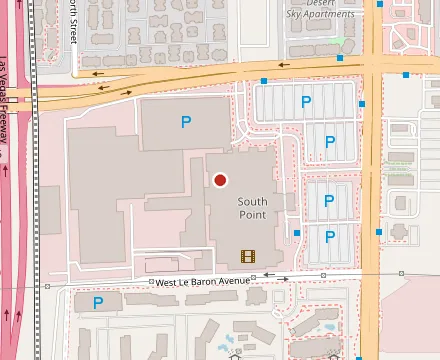
Smith and Wollensky is a national-name steakhouse that has planted its flag on the Strip and earns its keep through the quality of its beef program rather than the novelty of its setting. The room operates on the second level, a deliberate remove from the casino floor, with the kind of old-school steakhouse posture that the format has always required: generous portions, a wine list with depth, and service calibrated to the occasion. The dry-aged steak is the reason to be here. A room that runs a proper dry-aging program is making a commitment to process over convenience, and the result is the pronounced mineral depth and textural character that differentiates serious steakhouse beef from the mid-tier competition.
The wagyu filet mignon rounds out the upper tier of the beef list, soft-textured and well-suited to the medium-rare cook the kitchen runs consistently. The surf and turf is the room's combination play, pairing that beef with seafood in the classic expense-account format that the Strip's steakhouse culture was built around. Mac and cheese is the flagship side, the kind of rich, unironic steakhouse accompaniment that works precisely because it makes no apologies. Vegas has 59 steakhouses on the site, and the Strip corridor runs several of the most recognizable national names in the format.
Smith and Wollensky holds its position through the dry-aging program and a consistency of execution that reads across a wide range of diners and occasions. The price is high-end by any measure, but that is the operating reality of the Strip steakhouse tier. Birthdays, deal dinners, and celebration meals with no particular spending constraint are the natural fit. The room reads more accessible than the stiffest white-tablecloth operations, which broadens the audience without diminishing the core steak proposition.
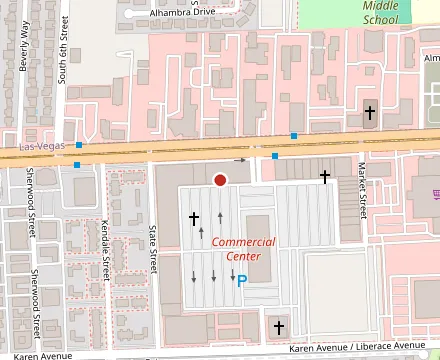
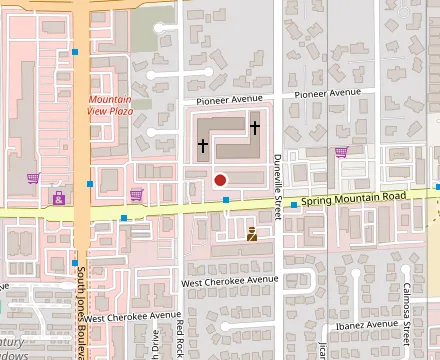
Lotus of Siam is not a recent discovery. It is the room the valley's serious diners have measured Northern Thai cooking against for decades, and the current Summerlin location, housed in what was formerly the Red Rock Casino Buffet space, carries that weight with the same kitchen focus that made the original Commercial Center address a national conversation. The room is larger and more polished than where Saipin Chutima started, but the cooking remains the point.
The Nam Kao Tod arrives as it always has: crispy rice salad with fermented sausage, dried shrimp, ginger, lime, and enough chile heat to require a decision about pacing. It is a dish that has no analogue in the Thai menus running up and down Spring Mountain, and it is the first thing to order for anyone who has not been. Khao Soi follows the northern template precisely, the curry-braised broth running deep under the tangle of egg noodles and crispy noodle garnish, the pickled mustard greens cutting the fat in the right proportion. The Crying Tiger Beef lands on the table as a clean-fire preparation, the char doing the work without ceremony.

The wine program is one of the more serious in the valley for a Thai restaurant, and the room draws diners who approach the pairing with real intention. Tables run at a steady pace on busy nights, so the room is not a quick turn; plan for a full evening. Pricing sits in the moderate range for the level of cooking, which means the value holds up against much more expensive options on the Strip. The clientele is a reliable mix of locals who have been coming since the early years and visitors who came specifically for this room.
Bazaar Meat operates inside the SLS Las Vegas as the rare Strip steakhouse with a genuine culinary identity beyond the prime-beef template. The Spanish thread running through the menu is the tell: jamón Ibérico de Bellota appears alongside the dry-aged ribeye not as a novelty but as a statement about where the kitchen's loyalties actually lie. This is José Andrés territory, and the room earns that association on the plate.
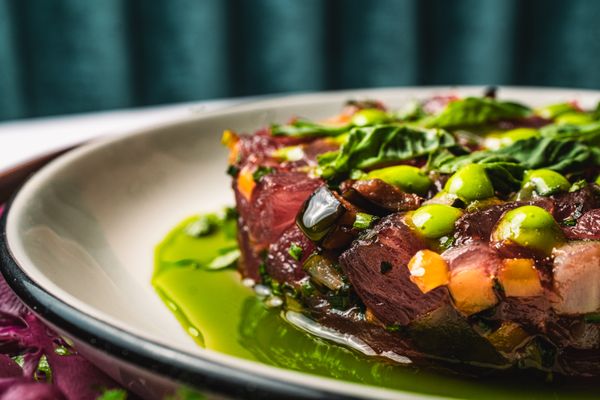
The dry-aged ribeye is the anchor, and it performs like one. The aging process builds the concentrated, mineral depth that separates a serious steakhouse from a room just selling expensive beef. The wagyu beef tartare reads as the menu's precision statement, the kind of preparation that exposes any inconsistency in sourcing or execution. Both dishes hold up to the scrutiny a price point this high invites.
The jamón Ibérico de Bellota is worth treating as its own course rather than an afterthought. Bellota-grade jamón is a different product than the Serrano that shows up at lesser rooms, and the kitchen understands that; the slice thickness and temperature matter here in ways the typical Strip steak program would never consider. The Spanish influence also extends the menu in the direction of serious non-meat options, which is unusual for a steakhouse and functional for a table that doesn't vote unanimously for the ribeye.
Service runs at a pace that keeps guests at the table rather than turning them toward the door. The room reads as a deliberate special-occasion destination: high-end pricing, a setting built for the evening rather than the meal alone, and enough kitchen range to reward the kind of table that wants to order across the full menu rather than anchor to a single cut. For a Strip steakhouse, the Spanish identity is not a gimmick; it is the actual argument for the room.
Hugo's Cellar occupies the lower level of the Four Queens in Downtown Las Vegas, and it operates as though the celebrity-chef era on the Boulevard never happened. That is the point. The room is built around occasion dining, tablecloth service, unhurried pacing, a wine program with depth, and it has held that position long enough that the city's established-rooms landscape treats it as a fixed coordinate.
The prime rib is the anchor. It comes from a kitchen that has been running this menu long enough that the cut reads as a statement of intent rather than a holdover. The lobster tail works the same side of the ledger, straightforward, properly executed, the kind of dish that earns its place on a high-end menu by doing the thing cleanly rather than cleverly. The Caesar salad, prepared tableside, is the room's most visible piece of theatre and signals immediately that this kitchen is not in a rush.
Service is the room's other defining feature. Attentive without pressure, the front-of-house operation calibrates the pace to the table rather than to a turn. Every guest receives a long-stemmed rose on arrival, a detail that has been in place long enough to count as institutional rather than performative. The bartender has his own reputation; the bar functions as a room within the room for guests who want to check the place out before committing to a full evening.
For Downtown Las Vegas, Hugo's Cellar answers a specific question: where does occasion dining live off-Strip, in a building with actual history, without the markup that the Boulevard imposes on the same category? The answer has been the same for decades. Special-occasion room, expense-account room, and a legitimate choice for any visiting guest a co-worker steers toward Fremont.
Toca Madera operates at the intersection the Strip does well when it does it right: a steakhouse with a cocktail program that holds equal weight to whatever lands on the plate. The room presents as modern and sophisticated without the fortress formality that makes some expense-account rooms feel punishing. Approachable is the right word, and approachable at this price point is harder to execute than it sounds.
The tacos function as an entry point, and they earn their place on a menu anchored by steak. In a room calibrated for special occasions, the fact that the taco order pulls people back is a signal worth reading. The kitchen is running a full program here, not a steakhouse with a few Latin gestures bolted on for differentiation.
The steak is the spine of the operation, as it should be at this price. The weekend brunch extends the room's range in the direction most high-end Strip rooms avoid; it pulls a different crowd and holds a different rhythm than the dinner service, which runs late by design. Late-night viability on the Strip is not accidental. Rooms that want that business build toward it, and Toca Madera reads as one that has.
The cocktail program is a genuine part of the proposition, not background noise. The bar is staffed to match the room's ambitions, and the drink order matters as much as the entrée decision in a way that most steakhouses do not ask of their guests.
Paradise address puts this on or adjacent to the Strip corridor. The price is high-end and the room earns it, though the full experience is centered on the main dining room. Date night, late-night occasion dinner, weekend brunch with real stakes: the calendar covers are there. The room has built something with enough range to stay relevant across all three.
BLACKOUT Dining in the Dark runs one of the more singular operating concepts in the valley: guests eat a seven-course tasting menu in complete darkness, guided by staff who work the room without light. The concept is the restaurant, and the kitchen understands that. A meal here is not a novelty that coasts on the gimmick; the food is what holds the experience together, and the execution is careful enough to carry the weight.
The tasting menu rotates and the courses are not disclosed in advance, which means the kitchen is writing the contract each service. What arrives at the table is well-seasoned and built with some precision; the Herb-Crusted Lamb reads as the anchor of the savory program, the kind of dish that signals a kitchen with a real culinary vocabulary behind the concept. The Chocolate Decadence Dessert closes the seven courses with enough weight to register even when the visual cue is gone. Flavor and texture carry every plate here by design, and the kitchen appears to know it.
The room operates on table service with guides handling the transition into and through the darkness. The staff is central to how the experience lands; the guided-entry format requires a level of hospitality competence that goes beyond the standard front-of-house role, and the room appears to staff for it. First-time guests arrive uncertain and leave having eaten a full, composed meal.
Chinatown on Spring Mountain is a corridor built on specificity; rooms here tend to commit to a point of view. BLACKOUT commits harder than most. The price point is high-end, which places this squarely in special-occasion territory. For date nights and group celebrations looking for something that cannot be replicated at any other table in the valley, the room earns that spend.
Mizumi sits inside the Wynn Las Vegas, overlooking the resort's lake, and it operates as the kind of room where the occasion justifies the price. The city has no shortage of Strip-side Japanese showpieces, but Mizumi earns its position through menu execution that runs consistently across the record.
The omakase tasting menu is the room's center of gravity. Course progression is deliberate and the pacing holds, each stage reads as considered rather than mechanical. The small bites between courses carry the same weight as the headliner plates, which is the sign of a kitchen running a real program rather than coasting on the room's address.
The miso-glazed black cod anchors the à la carte side. Rich and silky, it delivers the kind of balance that separates a well-executed signature from a set piece. The Mizumi Special Roll rounds out the picture: fresh product, creative construction, presented with care. Together, these two dishes describe the kitchen's range, the cod speaks to classical Japanese technique; the roll speaks to the Las Vegas dining instinct for spectacle done with substance behind it.
The sake program runs deep by any standard in the valley. It functions as a genuine pairing vehicle rather than a token list, which matters in a room built around omakase service.
Lakeside window seating is the variable that tips a special-occasion dinner into something guests remember by the room rather than just the food. Mizumi is priced accordingly; it is not a casual decision. Service is attentive and calibrated to the occasion, responsive to milestones without becoming performative.
For the Strip's Japanese dining tier, Mizumi is among the rooms that have established a sustained standard. Paradise's established Japanese scene lives largely in the Chinatown corridor off-Strip; Mizumi is the Strip-side counterargument, and it makes the case on cooking, not just setting.
Michael Mina is a Strip-side fine dining room running at the high-end of the New American register, where the kitchen's emphasis lands squarely on seafood. The Lobster Pot Pie is the signature that defines the room, a preparation that has become the reason many tables book in the first place. It is the kind of dish that carries a room's reputation across years and earns its place on the menu by delivering on that weight. The Miso-Glazed Black Cod runs on similar logic, a studied preparation that asks the fish to carry the plate, and it does. The Tuna Tartare completes the seafood-forward picture at the opening of the meal.
Service is the other half of what this room sells. Saturday evening reservations run at 6:30 and the floor is staffed to match the price point, with the kind of attentive pacing a special-occasion room requires. The combination of kitchen execution and front-of-house professionalism is what separates a Strip fine dining room that delivers from one that coasts on location. This room leans toward the former. The wine program and the overall structure of the meal reflect an operation that takes the tasting-room format seriously.
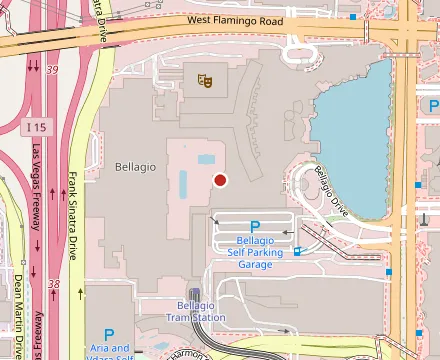
As a Paradise-side Strip room, Michael Mina sits inside the Bellagio, which sets the physical context. The clientele skews celebration and special occasion, couples marking an anniversary, business meals run on someone else's account. The price is high by any measure, but the kitchen's consistent execution across the seafood-forward menu gives it something to stand on. In a city where the celebrity-chef concept can run on reputation alone, this room appears to be doing the work. For a formal occasion meal on the Strip, the Lobster Pot Pie alone is reason enough to make the reservation.
Peter Luger arrived in Las Vegas with a century of Brooklyn reputation behind it, and the Caesars Palace location carries that weight seriously. The room sits inside one of the Strip's most recognizable addresses, but the operating logic is pure Peter Luger: the porterhouse is the program, and everything else is support. The porterhouse for two is the anchor, a dry-aged cut served in the house's signature sliced style, with the fat rendered and the crust holding up. It lands with the Peter Luger sauce on the side, a tomato-based house preparation that has its own following and that the room makes no apologies for. The thick-cut bacon deserves equal attention.
Served as a starter, it arrives as a slab, not a strip, and it reframes what a steakhouse first course can be. The Peter Luger burger draws its own loyalists among those who arrive outside peak dinner hours, a compact menu item that punches well above its category. The black cherry margarita has become a recurring mention as the cocktail of choice for the room, a detail that would read as odd at a purist Brooklyn institution but fits the Strip context. Reservations are the operating expectation here. The room runs as a full-service, expense-account steakhouse on a Strip floor plan, which means the pace is deliberate and the bill reflects it.
Price is high-end by any measure, and the kitchen does not deviate from the house formula. For a room with this lineage, consistency is the point. The Strip has seen celebrity-chef outposts come and go; Peter Luger's argument is that the formula does not need reinvention.
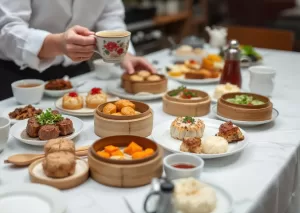
Hakkasan sits inside MGM Grand, which places it squarely in the Strip's high-end Chinese dining tier, the kind of room that runs tablecloth service and a full dim sum rotation where most of the valley runs counter stools and carts. The cuisine is Cantonese-rooted, and the format is a formal one: har gow, siu mai, and char siu bao as the anchors, ordered at the table rather than flagged down from a passing trolley.
The har gow is the honest test of any dim sum kitchen. Thin skin, clean pleats, shrimp that holds its snap, this is the dish that tells the room's story, and at Hakkasan it draws consistent attention as the standard-bearer. The siu mai runs alongside it: pork and shrimp, open-topped, the kind of dumpling that separates careful kitchens from careless ones. Char siu bao closes the core trio, soft bao, roasted pork filling, the slight sweetness that defines the classic.
Sunday is the room's primary event. The full dim sum rotation runs through the afternoon, and it has built a real returning clientele, regulars who come monthly and work through the menu systematically. That pattern, sustained across time, is meaningful in a 24-hour town where novelty turnover is relentless.
The caveat is real. At this price point and in this setting, execution consistency matters more than it does at a neighborhood dim sum counter. Cold dumplings and pre-scooped desserts have surfaced in the record, and at high-end prices those lapses register harder. The room's best case and its worst case are farther apart than a more modest operation's would be.
For Las Vegas, the broader context is Spring Mountain Road, where the valley's Chinese dining lives at neighborhood prices. Hakkasan is not competing with that corridor. It is the Strip-side formal alternative: the choice when the occasion calls for a full dining room rather than a plastic chair and a cart.
The Golden Steer has been running the same room longer than most of Las Vegas's landmark buildings have been standing. That fact alone explains the reservation calendar: summer bookings for December are not unusual, and the room fills because the room has earned it. This is the established-steakhouse formula executed with conviction across decades, not a recently renovated room borrowing the aesthetic.
Prime rib anchors the menu and anchors the evening. The cut arrives the way a room with this kind of tenure delivers it: no performance around the preparation, just the product. The shrimp cocktail is the right first move, a room-appropriate opener that signals the kitchen is running a focused program rather than a broad one. The tableside Caesar salad is where the room's operating character reveals itself most clearly. Tableside preparation is a deliberate time commitment; it slows the turn and gives the table room to settle into the meal. A room this busy, with a reservation lead time this long, could have removed it years ago. The fact that it has not says something about what the Golden Steer is actually selling.
The room operates on full-service seating with reservations essential and a calendar that requires patience. Arriving on time is the correct posture; the room will seat when it is ready. Service reads as polished and deliberate throughout the record. The price reflects the room's position in Las Vegas steakhouse culture: high-end, special-occasion, expense-account territory. This is not an everyday room. It is the room for a milestone dinner, an anniversary, a December celebration booked in July.
Las Vegas has steakhouses in almost every price tier and every neighborhood. The Golden Steer sits at the end of a longer line than any of them.
Delmonico Steakhouse operates inside The Venetian, which places it squarely in Strip territory, the kind of address where the room is part of the occasion. That positioning is honest: this is a celebration room, a group-booking room, a place people plan around rather than stumble into. The bone-in ribeye is the anchor, a cut that signals the kitchen's priorities plainly. Prime beef, properly handled, is the whole argument here, and the ribeye makes it without qualification.
The creamed spinach is the supporting evidence, the kind of steakhouse side that exists not to complicate the plate but to hold up its end of it. It does. The bread pudding soufflé closes the meal with the same institutional confidence, a dessert that reads as a commitment rather than an afterthought. The room handles volume, including fully booked holiday seatings with large parties, without losing composure.
Service runs attentive and organized under those conditions, which is the real test for a high-covers room working a busy night. Not every visit lands at the same height: the kitchen's execution can vary, and a Strip steakhouse at this price point sets expectations it does not always clear. The honest read is a room that performs best when the occasion matches the setting, a birthday dinner for a table of ten, a Thanksgiving meal for a solo diner who wanted the full experience, a celebration that calls for red leather and a serious wine list. That is what Delmonico is built for, and at its best, it delivers the Strip steakhouse the way the format was designed to run.
CUT by Wolfgang Puck operates inside the Venetian as a full-dress Strip steakhouse, the kind of room where the formality is intentional and the price point is not incidental. The dark-wood build-out, calibrated lighting, and service that runs at a formal clip signal exactly what the room is: an expense-account room, a celebration room, a room where the Puck brand premium is baked into the bill from the first bread course.
The dry-aged ribeye with bone marrow butter is the anchor of the menu and earns its place there. Dry-aging concentrates flavor in ways that wet-aged beef doesn't reach, and the bone marrow butter compounds that richness without obscuring the char. It is a straightforward argument for why this kitchen costs what it costs. The Maine lobster cocktail reads as the classic cold opener the room demands, clean and properly executed, the kind of first course that sets the register for what follows. The Wolfgang Chinois chicken salad carries the signature Puck identity, the Asian-inflected preparation that dates to the Chinois on Main era and still holds as a reason to order it here.
Service runs impeccably by most accounts, attentive without becoming intrusive, and the room manages the formal-steakhouse cadence with consistency. The value question surfaces in the record, and it is honest: CUT prices at the top of the Strip steakhouse tier, and whether the ribeye and the room justify that against other rooms on the boulevard is a calculation every diner makes for themselves. What is not in question is the execution level. The kitchen delivers what the room promises.
Located inside the Venetian, close to the rewards desk, making it straightforward to locate even in that property's considerable square footage.
SW Steakhouse at Wynn sits in the tier of Strip rooms that have to be good because the room costs too much to coast. It earns the price. The program runs on prime beef and wagyu, and the kitchen's approach to each is consistent in a way that matters at this level: a steak cooked correctly once is a steak cooked correctly across years of return visits. The room draws couples marking anniversaries and occasions that call for that kind of reliability, and it delivers the thing they came for without drift. That is not nothing in a 24-hour town where Strip dining is often about the name above the door more than what comes out of the kitchen.
Prime steak is the spine of the menu, and the kitchen treats it as such. Execution holds across cuts. Wagyu beef extends the program upward for those inclined to spend deeper into the list. Seafood sides round the menu in the way a serious steakhouse should, providing balance without pulling attention from the beef. The sides here are rich enough to read as a secondary attraction, not just table filler. The overall composition is the classic expense-account steakhouse structure done with discipline.
Service at this price point is part of the product, and SW runs that FOH with the polish expected from a Wynn property. Reservations are the operating norm; the room fills on weekends and the calendar is worth consulting ahead of time. Price runs high-end by any measure, and the room makes no attempt to soften that reality. What SW offers in return is a consistent, well-executed Strip steakhouse night framed for occasions that justify the outlay. For a city with 59 steakhouses indexed on this site, that kind of sustained execution over time is the relevant credential.
Lawry's The Prime Rib has operated the same room for decades, and that is precisely the point. In a city where the celebrity-chef era keeps rewriting the steakhouse playbook, Lawry's holds its position: a high-end, occasion-driven room where the prime rib arrives carved tableside from a silver cart and the creamed spinach has not changed since before most of its servers were born. The reporting unit is the room, and this one runs like a clock.
The prime rib is the menu. Every other choice organizes around it. The beef arrives tender and well-rested, the kind of result a kitchen achieves through consistency in rotation and timing rather than improvisation. Creamed spinach is the canonical pairing, and it earns the designation: rich, thick, a counterweight to the beef's iron depth. Yorkshire pudding appears alongside, a nod to the English service tradition the room has carried from its Beverly Hills origin. Lobster tail rounds out the menu for those who want the surf-and-turf occasion, though the prime rib is what the room was built to do and what the record supports.
The tableside carving is not theater for its own sake. It is the operating model: the server, the cart, the chef's knife, the moment of selection. That sequence is what Lawry's charges for and what its regulars return to mark anniversaries, milestone birthdays, and corporate dinners when the occasion demands a room that takes itself seriously.
At high-end pricing, the value proposition is clear. This is not an everyday steakhouse. It is a special-occasion room that has earned the designation by doing one thing well across a long run. In a 24-hour town with a short attention span, that longevity is its own kind of verdict.
Estiatorio Milos operates inside the Venetian, adjacent to the Grand Canal Shops, and it represents the high-end Greek seafood program at its most deliberate. The room is not hedging toward a tourist-friendly Mediterranean vagueness; it is running a specific tradition, and the whole fish is the organizing principle.
Whole fish arrives grilled to order, the selection changes with what the kitchen is sourcing, and that seasonality is the point. Grilled octopus reads as a benchmark preparation: cleaned, properly charred, not worked over. Mediterranean branzino holds up as the signature order for anyone who wants the room's identity in a single plate. These are not ambitious riffs on Greek cuisine; they are the thing itself, executed at Strip register.
The price reflects that position. Milos runs at the top of the Las Vegas seafood market. Whole fish is priced by weight at market, and a table for two at full execution will reach expense-account territory without difficulty. That is not a complaint built into the room's operating pattern, it is the room's operating pattern. The Strip's Greek showpiece earns its rate by sourcing seriously and by holding quality across years of volume, which is the harder part of the equation for any high-covers Strip room.
The Venetian location places it in the middle of one of the highest-traffic dining corridors in the valley, which means walk-in expectations need calibration. Reservations are the sensible move. The room draws a mix of celebration dining and the kind of Strip visitor who has done the research and wants a meal, not just a spectacle. It fits the special-occasion Greek seafood bracket that has no serious off-Strip competition at this scale. The Las Vegas Greek dining landscape, from Spring Mountain neighborhood spots to Strip showpieces, produces nothing else at this level.
Spago at the Bellagio is the Strip's long-running argument that celebrity-chef dining can still earn its price. Wolfgang Puck planted his flag here years before the boulevard filled with marquee names, and the room has outlasted most of its imitators. The operating pattern is straightforward: reservations are essential, the room books tight, and the occasion tends to justify the logistics.
The smoked salmon pizza is the signature, and it has been for a reason. The combination reads as counterintuitive on paper and correct on the plate, the kind of dish that defines a restaurant because it has no obvious analogue elsewhere in the valley. Duck confit follows the same logic: classical French technique anchored to a menu that moves between American and European influences without losing its footing. Neither dish is a relic; both hold the room's identity together.
Weekend brunch draws its own crowd. Eggs Benedict is the vehicle, but the appeal is the complete occasion: the Bellagio setting, the window views, the service register that matches a celebration meal. Birthday parties and anniversary dinners fill the dining room alongside visitors who planned the reservation weeks out. The room rewards that kind of planning.
Price sits firmly at the high end, which positions Spago clearly. This is not the off-Strip neighborhood room that feeds the valley on a Tuesday. It is the Strip expense-account room and the special-occasion destination, doing that job with a kitchen and a front-of-house that have sustained the standard long enough to make the price defensible. The Strip has a thousand dining options; Spago has held its lane since before most of them existed. That longevity is its own statement.
888 Sushi and Robata (Japanese, 9.1) leads this week, followed by Mikiya Wagyu Shabu House (Japanese, 8.8) and Gangnam Asian BBQ Dining (Japanese, 8.4).
Partage (French, 7.9) leads this week, followed by Joel Robuchon (French, 7.7) and Al Solito Posto (Italian, 7.6).
888 Japanese BBQ (Japanese, 9.2) leads this week, followed by 888 Sushi and Robata (Japanese, 9.1) and Smile Shota (Sushi, 8.9).
Chubby Cattle BBQ (Japanese, 9.5) leads this week, followed by Smile Shota (Sushi, 8.9) and Sumo Sushi (Sushi, 8.8).
Every restaurant earns an Insider Score from 0 to 10, built from its full review record and weighted for review volume, recency, and our editors' read. The same method is applied to every kitchen in Las Vegas.
Chubby Cattle BBQ holds the top spot on this week's List with an Insider Score of 9.5. The kitchen serves Japanese, in Chinatown, at 4525 Spring Mountain Rd.
Paradise leads this week with 25 ranked rooms, followed by Chinatown with 10 and Spring Valley with 3.
It is rebuilt every week from the current review record, so a room that slips or surges moves with the numbers.
Because the data puts them there. The score does not know where a restaurant sits. A neighborhood counter and a marquee dining room are measured exactly the same way.
The new opening, the sleeper the score just flagged, and the one room worth booking this week. Free.